" Blog da Horta Biológica: DIY
Mostrar mensagens com a etiqueta DIY. Mostrar todas as mensagens

Potassium Hydroxide Liquid Soap for Garden Pests and Laundry

At the request of our Azorean readers, we're going to teach how to make potassium hydroxide / coconut soap for garden and orchard pests... and more!

First of all, we'd like to thank our readers for following us and trusting in our work, and we'd like to send a big hug to those of you who follow us from the wonderful islands of the Azores!

At the end of this post, you can also watch our educational video where we show you in detail how to make this soap.


For this post, we've formulated a soap that, in addition to having only only a few ingredients, is very effective at fighting pests in the garden and orchard, as well as washing clothes in the home laundry.

Let's start by looking at the ingredients and understanding why each one is used.


Ingredients


  • 141g Cold-pressed extra virgin coconut oil
  • 94g Extra virgin olive oil
  • 60,11g Potassium hydroxide (KOH), 90% pure *
  • 180,32g Distilled water


* Potassium hydroxide is highly hygroscopic, which means it has a strong ability to absorb moisture from the air. For this reason, as soon as it is weighed, it should be immediately sealed in its container, which must be well stored to prevent its deterioration. After sealing the bottle, we place it inside a tightly closed bag and store it in a cabinet to avoid contact with moisture. See the images in the video for a better understanding.


If you don't have a precision scale, round down, never round up.


Important: This soap does not have super fat, so it is not intended for use on the skin!


Why These Ingredients


First of all, it's important to remember that all the ingredients must be of high quality! Sometimes, when the soap is not made for skin use but for pests and laundry, there is a temptation to use low-quality oils. In this case, we strongly advise against it, since the purpose of this soap is also to nourish and care for the plants. 

On the other hand, we also want to stress that this formula has been calculated on the basis of pure oils. Each oil has its own saponification index, which means that if dubious oils are used (i.e. oils that are not truly extra virgin), the result could be a fiasco.

If you've never made soap before and aren't familiar with the process or the technical terms we are using, please read our post first: How To Make Soap.


Let's take a look at each of the ingredients:


  • Cold-pressed extra virgin coconut oil: coconut soap is extremely effective in controlling garden pests (find out more in our post Soap and Vegetable Oil Spray). Additionally, coconut is highly nutritious and is used as an organic fertilizer for the healthy growth and development of plants.
  • Extra virgin olive oil: the oil can be plain or macerated with pest-repellent plants such as peppermint, rosemary, thyme, etc. Find out more about macerations in our post How To Make a Maceration and more about plants and their uses in our book The 5 C's of Aromatic and Medicinal Plants. The use of olive oil in this formula has two functions. One is to add more beneficial properties to the soap, and the other is to achieve a final consistency that is easier to work with, since 100% coconut soap is much thicker and more difficult to break down and dilute.
  • Potassium hydroxide (KOH) 90% pure: potassium is one of the essential nutrients for plants, and potassium soap, in addition to helping control pests, will contribute to plant protection, nutrition and growth. It has to be 90% pure to guarantee effectiveness in the saponification reaction. 

  • Distilled water or rainwater: is used because it is free of impurities, minerals, and contaminants. Distilled water must be used to ensure that the chemical reactions take place as expected and to guarantee the purity, precision and consistency of the final product.


The Materials


To make this soap, you need to gather some materials. The ones we've marked in blue must be used exclusively for making soap because, for food safety reasons, the same materials cannot be used for cooking food and making soap (due to the chemical reactions between fats and potassium hydroxide, also known as caustic potash). 


None of the materials can be made of aluminum because of the reaction with potassium hydroxide!


This list of materials is in the order of use when making soap. 


  • 1 Digital kitchen scale (must be digital for greater accuracy in weighing ingredients)
  • 1 Stainless steel pan
  • 2 bowls for weighing the oils (we recommend weighing them separately in case of mistakes that require adjusting the quantities)
  • 2 tablespoons to help remove the coconut oil from the jar if it is solid
  • 1 Plastic or glass container for the water
  • 1 Plastic or glass container for the potassium hydroxide
  • 1 Pan base
  • 1 Stainless steel spoon to dissolve the hydroxide in the water
  • 1 Kitchen spatula for scraping the bowls with the oils
  • 1 Spatula for stirring the potassium hydroxide solution with the oils
  • 1 Hand blender (yes, it really must be exclusive for soap making!)
  • 1 Digital kitchen thermometer
  • 1 Small spoon (to help with pH tests)
  • 1 Pyrex
  • pH strips
  • 1 Large spoon (to help transfer the soap to a container)
  • 1 Container with lid to store the soap batter at the end
  • 1 Water container
  • 1 Water boiler, which will be very useful for dilution
  • 1 Funnel
  • 1 Container to store the liquid soap in at the end

These are the materials we use. Some of these materials are mandatory, others can be adapted according to what you have at home. Watch our video for a better understanding.


Safety Equipment


As always, safety equipment is more than mandatory, and here are all the necessary elements:

  • Safety goggles
  • Rubber gloves
  • Face mask. Surgical masks (also known as “Covid masks”) are not effective for dealing with chemical reactions, so more closed masks should be used.
  • A long-sleeved lab coat and closed shoes. All skin must be well protected.
See all the safety warnings on soap making in our post How To Make Soap.


How to Make Potassium Hydroxide Liquid Soap


First of all, you should know that the result is never liquid soap, but a thick batter that only becomes gel-like or even liquid once diluted, depending on the dilution ratio.

This soap is made using the Hot Process, meaning the soap will be cooked and will not need to cure once it has been made. Once again, if you don't understand these terms, read our post first: How To Make Soap.


Before we start the step-by-step instructions, we strongly recommend that you have a log book every time you make your own soap, so that you can write down (and later remember) all the important details of each production batch. Here is the notebook we use and recommend to everyone who makes soap at home, whether for personal use, to give away or to sell:


Log book that we use and recommend


So now we're going to share with you how we make this soap at home. Here are all the details:

  1. Start by weighing the empty stainless steel pan (ours weighs 374g). Knowing the weight of the pan will be crucial at the end of the whole process.
  2. Weigh the oils separately, each in its own bowl.
  3. Weigh the water.
  4. Put on all the safety equipment before starting to handle the potassium hydroxide.
  5. Weigh the potassium hydroxide.
  6. Add the oils to the pan (use the kitchen spatula to remove all the oil from the bowls, ensuring there is no waste or significant differences in the amount of oil).
  7. Turn the stove to low heat. (There's no need to heat it up too much, just until the coconut oil melts completely).
  8. While the fats are heating, pour the hydroxide into the water (never the other way around!) and stir with a stainless steel spoon.
  9. Once dissolved, add the water solution to the fats in the pan;

From here on, it's crucial to constantly monitor the temperature while stirring the solution!

    10. Measure the temperature and stir the solution with the spatula that is exclusively for soap making. The temperature of the solution should not exceed 70ºC. For those who have a Crockpot (a pan that maintains the temperature), this won't be a problem, but for those who don't, as in our case, it's necessary to keep putting the pan on and off the heat to make sure it doesn't go over 70ºC.
     11. After stirring the solution a little with the spatula, use the hand blender. Blend the solution for a few minutes, always monitoring the temperature, in a combination of stirring and a little heat from the stove.
     12. When the batter is too thick for the hand blender, use the spatula again. For us, the batter took 8 minutes to reach this point.
       13. When the batter has thickened and is beginning to steam a little, turn off the stove and continue cooking the batter using only the residual heat from the pan.
       14. Once the batter has reached the consistency of a paste where it resembles mashed potatoes, but much thicker, it is probably ready. For this we do the pH test.
      15. To do the pH test, put water in a Pyrex, add just a small amount of the soap paste (for a more reliable result, take it from the inside of the paste and not the outside) and stir well. Then, add a little boiling water as this helps to dissolve the soap paste.
        16. Place a pH strip in the water and check the result. The ideal pH for soap is between 8 and 10. Our paste has a pH of 8, which means that the paste is cooked and the soap is ready.
         17. Allow to cool completely before moving on to the next stage.


Storage and Dilution


To store and dilute, it requires a bit of mathematics, but nothing too complicated.

We got a total weight of paste of 429g. How do we know this? We know because we weighed the tare of the pot at the beginning (374g) and weighed the pot again after the soap paste had cooled (803g).  803-374 = 429g of paste.

For this post and video, we decided to divide the paste in half so that we could demonstrate how to store it and how to dilute it, both for use against garden pests and for home laundry. Let's break it down:

  1. Once the paste has cooled down, we removed about half of it from the pot using a spoon and a spatula.
  2. After this removal, the pan weighed 632g. So, 632 - 374 = 258g. This was the amount that remained in the pan to be diluted.
  3. 429 - 258 = 171g. This was the amount we stored for later dilution.


Storage

The 171g for further dilution has been stored in a plastic container with a lid. It can be stored in a cool place at room temperature.


Laundry Dilution


The 258g that remained in the pot were diluted to make laundry detergent. 

Now, how to dilute it?

The ideal ratio for this is 1:1.5

So 1 part soap to 1.5 parts water (258g x 1.5 = 387g water).


  1. Weigh out 387g of water.
  2. Use a kettle to quickly bring the water to a boil. The hot water will help break down and dissolve the thick paste. Some water is always lost to evaporation when boiling, but for this purpose, it doesn't make much difference.
  3. Add the boiling water to the pan, use the spatula to break up the paste a little, distributing it better throughout the water. Let it sit for a few minutes.
  4. Use the hand blender until it becomes a homogeneous liquid.
  5. Essential oils can be added at this stage. We prefer to use neutral detergent.
  6. Leave it to cool completely.
  7. After it has cooled, use a funnel to pour it into a container suitable for use in the laundry.
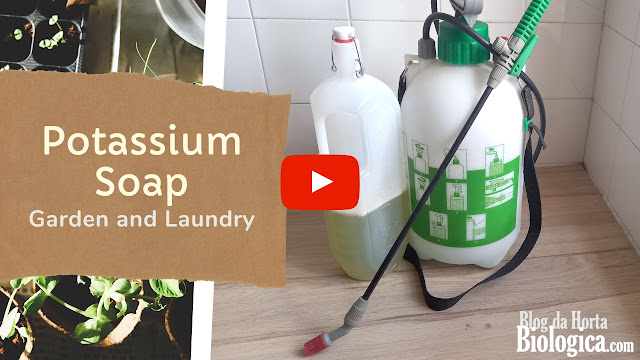
The use of this detergent is the same as for conventional detergents, meaning the recommended doses should be used according to the hardness of the water.


Dilution For Garden Pests


The 171g we saved for later were diluted to spray the pests in the vegetable garden and orchard. 

The dilution ratio for spraying varies depending on the type of soap, the pests to be combated and how heavily the plants are infested. In order to obtain a mild spraying liquid, for lightly infested plants, we will use a maximum of 10L of water for dilution. The 10L makes this easier as we have a 10L pot or two 5L water bottles can be used as an alternative. 

Many sprayers for home gardens are also 5L, so we advise you to make the dilutions according to these proportions, only adjusting the amount of soap according to the severity of the pest attack in the garden.

As this soap is difficult to break down, we recommend starting the dilution in the same way as we did for the laundry detergent, i.e. pour boiling water into the pan in a ratio of 1:1.5, break down and dissolve the soap, and then pour the solution into the pan or divide it between two bottles, filling them to the top with water. That's how you get a soapy spray!


How to Apply in the Garden and Orchard


Transfer the liquid to a sprayer.

The spray should only be used if pests are observed. It should not be used merely as a preventative method.

It should be applied directly to soft-bodied insects such as aphids, lice, mealybugs, caterpillars, whiteflies and moths. Remember not to spray directly on beneficial insects such as ladybugs and bees.

It can be applied once or twice a week, early in the morning or late in the day. Apply to the stems and leaves, not forgetting the back of the leaves where there is a higher concentration of pests.

Avoid applying on windy days and during the hottest hours of the day.


This post is already lengthy, and we hope it has been helpful to our readers! For a better understanding of this entire process, watch our video now, where we show each step in detail.

A big hug to our readers who follow us in the Azores and around the world!


Sabão Liquido de Hidróxido de Potássio Para as Pragas da Horta e Lavandaria

A pedido dos nossos leitores açoreanos, vamos ensinar a fazer sabão de hidróxido de potássio e coco para as pragas da horta e do pomar...e não só!

Antes de mais, agradecemos aos nossos leitores por nos acompanharem e confiarem no nosso trabalho e aproveitamos para enviar um grande abraço para quem nos segue nas maravilhosas ilhas do Açores!

No final deste post, vejam também o vídeo explicativo onde mostramos detalhadamente como fazer este sabão.


Para este post, formulámos um sabão que, para além de levar poucos ingredientes, é muito eficaz a combater as pragas da horta e do pomar, assim como a lavar as roupas na lavandaria caseira.

Vamos começar por saber quais os ingredientes e compreender o porquê de cada um.


Ingredientes


  • 141g de Óleo de coco extra virgem prensado a frio
  • 94g de Azeite puro extra virgem
  • 60,11g de Hidróxido de Potássio (KOH) com 90% de pureza *
  • 180,32g de Água destilada


* O hidróxido de potássio é altamente higroscópico, o que significa que tem uma forte capacidade de absorver a humidade do ar. Por esta razão, assim que for pesado, deve ser imediatamente fechado no seu recipiente e o mesmo deve ser bem armazenado para evitar a sua deterioração. Depois de fechar o frasco, nós colocamo-lo dentro de um saco bem fechado e guardamo-lo num armário para evitar o contacto com a humidade. Vejam as imagens no video para uma melhor compreensão.


Se não tiverem uma balança de precisão, devem fazer os arredondamentos por defeito, nunca por excesso.


Importante: Este é um sabão sem sobre-engorduramento, pelo que não serve para uso cutâneo!


Porquê Estes Ingredientes


Antes de mais é importante lembrar que todos os ingredientes têm de ser de alta qualidade! Por vezes, quando o sabão não é feito para uso cutâneo mas sim sim para as pragas e lavagem de roupa, há a tentação de utilizar óleos de baixa qualidade. Neste caso, desaconselhamos totalmente, uma vez que o objectivo deste sabão é também nutrir e cuidar das plantas. 

Por outro lado, também queremos frisar que esta fórmula foi calculada com base em óleos puros. Cada óleo tem o seu índice de saponificação, o que significa que, se forem usados óleos duvidosos (ou seja, óleos que não sejam realmente extra virgem), o resultado poderá ser um fiasco.

Se nunca fizeram sabão antes e não estão familiarizados com o processo nem com os termos técnicos que utilizamos neste post, leiam primeiro o nosso post Como Fazer Sabão.


Vamos então ver cada um dos ingredientes:


  • Óleo de coco extra virgem prensado a frio: o sabão de coco é extremamente eficaz no controlo de pragas da horta (saibam mais no nosso post Calda de Sabão e Óleo Vegetal). Para além disso, o coco é altamente nutritivo e utilizado como adubo orgânico no crescimento e desenvolvimento saudável das plantas.
  • Azeite puro extra virgem: o azeite pode ser simples ou macerado de plantas repelentes de pragas, tais como a hortelã-pimenta, o alecrim, o tomilho etc. Saibam mais sobre macerações no nosso post Como Fazer Uma Maceração e mais sobre as plantas e suas utilizações no nosso livro Os 5 C's das Plantas Aromáticas e Medicinais. A utilização do azeite nesta fórmula tem duas funções. Uma delas é trazer mais propriedades benéficas ao sabão e a outra é obter uma consistência final mais fácil de trabalhar, uma vez que um sabão 100% coco fica muito mais espesso e difícil de quebrar para depois diluir.
  • Hidróxido de Potássio (KOH) com 90% de pureza: o potássio é um dos nutrientes essenciais para a plantas e o sabão de potássio, para além de ajudar a controlar as pragas, vai contribuir para a protecção, nutrição e crescimento das plantas. Tem de ter 90% de pureza para garantir eficácia na reacção de saponificação. 

  • Água destilada ou água da chuva: é usada por ser livre de impurezas, minerais e contaminantes. A água destilada tem de ser usada para garantir que as reacções químicas ocorram conforme o esperado e para garantir a pureza, precisão e consistência do produto final.


Os Materiais


Para fazer este sabão é necessário reunir alguns materiais. Os que marcámos a azul, terão de ficar para uso exclusivo do fabrico de sabão pois, para a segurança alimentar, não se podem usar os mesmos materiais para cozinhar alimentos e para fazer sabão (devido às reacções químicas entre as gorduras e o hidróxido de potássio, também conhecido por potassa cáustica). 


Nenhum dos materiais poder ser de alumínio devido à reacção com o hidróxido de potássio!


Esta lista de materiais está por ordem de utilização durante o fabrico do sabão. 

  • 1 Balança digital de cozinha (tem mesmo de ser digital para uma maior precisão na pesagem dos ingredientes)
  • Panela de aço inox
  • 2 Tigelas para pesar os óleos (aconselhamos a pesar separadamente para o caso de haver erros e ter de retificar as quantidades)
  • 2 Colheres de sopa para ajudar a retirar o óleo de coco do frasco se estiver sólido
  • 1 Recipiente de plástico ou vidro para a água
  • 1 Recipiente de plástico ou vidro para o hidróxido de potássio
  • 1 Base de panela
  • 1 Colher de inox para dissolver o hidróxido na água
  • 1 Espátula de cozinha para raspar as tigelas com os óleos
  • 1 Espátula para mexer a solução da potassa com os óleos
  • 1 Varinha mágica (sim, tem mesmo de ser exclusiva para o fabrico de sabão!)
  • 1 Termómetro digital de cozinha
  • Colher pequena (para ajudar nos testes de pH)
  • 1 Pyrex
  • Fitas de pH
  • 1 Colher grande (para ajudar a transferir o sabão para um recipiente)
  • 1 Recipiente com tampa para guardar o sabão em massa no final
  • 1 Recipiente medidor de água
  • 1 Fervedor de água, que será muito útil na diluição
  • 1 Funil
  • 1 Recipiente para guardar o sabão em estado liquido no final

Estes são os materiais que usamos. Alguns destes materiais são obrigatórios, outros poderão ser adaptados conforme o que tenham em casa. Vejam o nosso vídeo para uma melhor compreensão.


O Equipamento de Segurança


Como sempre, o equipamento de segurança é mais do que obrigatório e aqui ficam todos os elementos necessários:


  • Óculos de protecção
  • Luvas de borracha
  • Máscara facial. As máscaras cirúrgicas (também conhecidas como "máscaras do Covid") não são eficazes para lidar com reacções químicas, pelo que devem ser usadas máscaras mais fechadas.
  • Bata com mangas compridas e sapatos fechados. Toda a pele deve ficar bem protegida.
Vejam todas as advertências sobre a segurança no fabrico de sabão no nosso post Como Fazer Sabão.


Como Fazer Sabão Líquido de Hidróxido de Potássio


Em primeiro lugar há que saber que o resultado nunca é um sabão líquido, mas sim uma massa espessa que só depois de diluída fica em gel ou mesmo líquida conforme o rácio de diluição.

Este sabão é feito pelo Processo a Quente, ou seja, o sabão vai ser cozinhado e não precisará de cura depois de estar feito. Mais uma vez, se não compreendem estes termos, leiam primeiro o nosso post Como Fazer Sabão.


Antes de começarmos o passo-a-passo, recomendamos vivamente a ter um caderno de registos cada vez que fazem o vosso próprio sabão, para que possam apontar (e mais tarde relembrar) todos os detalhes importantes de cada lote de produção. Aqui fica o caderno que usamos e recomendamos a todas as pessoas que fazem sabão em casa, seja para uso pessoal, para oferecer ou para vender:


Vamos então partilhar convosco como fazemos este sabão em casa. Vejam de seguida todos os detalhes:

  1. Começar por pesar a panela de inox vazia (a nossa pesa 374g). Saber o peso da panela vai ser crucial no final de todo o processo;
  2. Pesar os óleos separadamente, cada um na sua tigela;
  3. Pesar a água;
  4. Colocar todo o material de segurança antes de começar a lidar com o hidróxido de potássio;
  5. Pesar o hidróxido de potássio;
  6. Adicionar os óleos à panela (usar a espátula de cozinha para retirar todo o óleo das tigelas, de forma a não haver desperdícios nem grandes diferenças na quantidade dos mesmos);
  7.  Ligar o fogão em lume baixo; (Não é preciso aquecer muito. É mesmo só até o óleo de coco derreter por completo).
  8. Enquanto as gorduras aquecem, deitar o hidróxido sobre a água (nunca o contrário!) e mexer com uma colher de inox;
  9. Após estar dissolvido, adicionar a solução da água às gorduras na panela;
A partir daqui é crucial controlar constantemente a temperatura ao mesmo tempo que se mexe a solução!

    10. Medir a temperatura e mexer a solução com a espátula exclusiva para o fabrico de sabão. A temperatura da solução não deve passar dos 70ºC. Para quem tem um Crockpot (panela que mantém a temperatura) isso não será um problema, mas para quem não tem, como é o nosso caso, é necessário ir pondo e tirando a panela do lume para garantir que não passa dos 70ºC;
     11. Após agitar um pouco a solução com a espátula, usa-se a varinha mágica. Vai-se batendo a solução durante alguns minutos, sempre monitorizando a temperatura, numa combinação de agitação e um pouco de calor do fogão;
     12. Quando a massa ficar demasiado espessa para a varinha mágica, volta-se a usar a espátula. Para nós, a massa levou 8 minutos a chegar a este ponto;
       13. Quando a massa já está bem espessa e começa a deitar um pouco de vapor, desliga-se o fogão e pode-se continuar a cozinhar a massa apenas com o calor da panela;
       14. Assim que a massa chegar ao ponto de ficar parecida com puré de batata, mas bem mais espessa, é provável que esteja pronta. Para isso fazemos o teste de pH;
      15. Para fazer o teste de pH colocar água num pyrex, adicionar apenas um pouco de massa do sabão (para um resultado mais fidedigno, retirar da parte de dentro da massa e não da parte de fora) e mexer bem. Adicionar um pouco de água a ferver, pois ajuda a dissolver melhor o sabão;
        16. Colocar uma tira de pH na água e verificar o resultado. O ideal de pH do sabão é entre os 8 e os 10. A nossa massa tem um pH 8, o que significa que a massa está cozinhada e o sabão está pronto;
         17. Deixar esfriar por completo antes de passar à fase seguinte.


Armazenamento e Diluição


Para armazenar e diluir precisamos de um pouco de matemática, mas nada de muito complicado.

Obtivemos um total de 429g de massa. Como é que sabemos isto? Sabemos porque tirámos a tara da panela ao início (374g) e voltámos a pesar a panela após a massa esfriar (803g).  803-374 = 429g de massa.

Para este post e vídeo, decidimos dividir a massa a meio para podermos mostrar como armazenar e como diluir, tanto para a usar contra as pragas da horta como para a lavandaria caseira. Vamos por partes:

  1. Depois de fria, com a ajuda de uma colher e uma espátula, retirámos sensivelmente metade da massa da panela.
  2. Após esta retirada, a panela ficou a pesar 632g. Então, 632 - 374 = 258g. Esta foi a quantidade que ficou na panela para ser diluída.
  3. 429 - 258 = 171g. Esta foi a quantidade que armazenámos para diluição posterior.


Armazenamento

As 171g para diluição posterior, foram armazenadas num recipiente de plástico com tampa. Pode ser guardado num local fresco à temperatura ambiente.


Diluição Para Lavandaria

As 258g que ficaram na panela foram diluídas para fazer detergente para roupa. 

Agora, como diluir?

O rácio ideal para este efeito é de 1:1,5

Portanto, 1 parte da sabão para 1,5 partes de água (258g x 1,5 = 387g de água).

  1. Pesar 387g de água;
  2. Usar um fervedor para ferver rapidamente a água. A água quente vai ajudar a quebrar e dissolver a massa espessa. Ao ferver, perde-se sempre um pouco de água na evaporação mas, para este efeito, não faz grande diferença;
  3. Adicionar a água a ferver à panela, usar a espátula para quebrar um pouco a massa distribuindo-a melhor pela água e deixar descansar por alguns minutos;
  4. Utilizar a varinha mágica até que fique um líquido homogéneo;
  5. Nesta fase podem ser adicionados óleos essenciais. Nós preferimos usar o detergente neutro;
  6. Deixar esfriar por completo;
  7. Depois de frio, com a ajuda de um funil, verter para um recipiente adequado ao uso na lavandaria.
A utilização deste detergente é igual à dos detergentes convencionais, ou seja, devem ser usadas as doses recomendadas de acordo com a dureza da água.


Diluição Para as Pragas da Horta


As 171g que guardámos para mais tarde, foram diluídas para pulverizar as pragas da horta e do pomar. 

O rácio de diluição para pulverização varia conforme o tipo de sabão, as pragas a combater e o quão atacadas as plantas estão. De forma a obter um líquido pulverizador suave, para plantas pouco atacadas, vamos usar um máximo de 10L de água para diluição. Os 10L facilitam-nos esta tarefa uma vez que temos uma panela de 10L ou podem ser usados 2 garrafões de água de 5L em alternativa. 

Muitos pulverizadores para hortas caseiras também são de 5L, por isso, aconselhamos a fazer as diluições de acordo com estas proporções, mudando apenas a quantidade de sabão de acordo com a severidade do ataque das pragas na horta.

Sendo que este sabão é difícil de quebrar aconselhamos a iniciar a diluição da mesma forma que fizémos para o detergente de lavandaria, ou seja, colocar água a ferver na panela, num rácio de 1:1,5, quebrar e dissolver o sabão e depois então colocar o sabão na panela ou dividir por dois garrafões, enchendo com água até a cima. Assim, obtemos uma calda de sabão!


Como Aplicar na Horta e no Pomar


Transferir a calda para um pulverizador.

A calda só deve ser utilizada se forem observadas pragas. Não deve ser utilizada meramente como método preventivo.

Deve ser aplicada directamente sobre os insectos de corpo mole, tais como pulgões, piolhos, cochonilhas, lagartas, moscas brancas e traças. Não é demais lembrar para terem o cuidado de não pulverizar directamente sobre os insectos benéficos, tais como as joaninhas e a abelhas.

A aplicação pode ser feita entre uma a duas vezes por semana, de manhã cedo ou ao fim do dia. Aplicar nos caules e folhas, não esquecendo a parte de trás das folhas onde há maior concentração de pragas.

Deve-se evitar a aplicação em dias de vento e nas horas de maior calor.


Este post já vai longo e com ele esperamos ter ajudado os nossos leitores! Para uma maior compreensão de todo este processo, vejam agora o nosso vídeo, onde mostramos cada passo detalhadamente.

Um grande abraço e um xi coração para os nossos leitores que nos acompanham nos Açores e em todo o mundo!


Lemon Curd | 3 Ingredients | Dairy Free | Sugar Free | Quick, Easy and Healthy Recipe

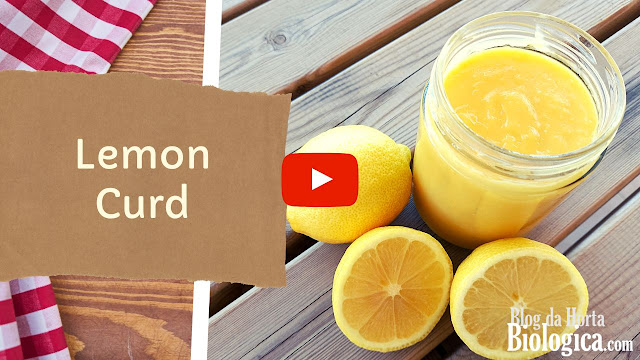
It's lemon harvest season again! Here on our blog, we've talked a lot about this wonderful and versatile fruit that always presents us with abundance. Sometimes there is so much lemon that we really have to use our imagination for using it all. From cooking to natural remedies, from detergents to cosmetics, among many other things, anything can be made with lemon. During the summer, we're really in the mood for a fresh, citrusy treat! That's why we're going to share our version of lemon curd, with 3 ingredients only, no sugar, and no butter. Healthy, super easy, and quick to make.  At the end of the post you can also watch our educational video where we show you how to make this recipe, step by step.

If you have much lemon and don't have time to prep recipes, you might like our post and video: 11 Tips To Preserve Lemon.


What is Lemon Curd Anyway?


"Lemon Curd" is a very old delicacy with British origins. It's a sweet, creamy paste originally made with lemon, eggs, sugar, and butter. It is commonly used for filling or topping cakes, but also for spreading on biscuits, toast, bread, or adding to other confectionery recipes. The word "curd" seems to be related to the thick, creamy texture that is obtained by cooking the ingredients. Nowadays, lemon curd is very popular all over the world and is yet another excellent way of using lemon!


Our Version of Lemon Curd


At home we like to come up with new stuff but we also like to make things simple. We wanted to make a lemon curd that was easy, quick, had few ingredients, and no sugar nor butter. So we chose just 3 vital ingredients for this recipe: lemon, eggs, and honey. The honey has to be multifloral and mild so that the cream is balanced and doesn't take on a strong flavor. We used honey from our own production. If you're curious to know what it's like to produce honey, check out our post and video: Harvesting and Extraction of Raw Honey. So let's jump into the recipe!


Ingredients


  • 4 eggs (we used a mixture of duck and chicken eggs)
  • 1/2 cup honey (remember it has to be multifloral and mild in flavor)
  • 1/2 cup lemon juice (the number of lemons needed varies)
  • Zest of 2 medium lemons

This recipe yields about 350g (12.34oz) of lemon curd. The quantity will always vary according to the size of the eggs and the final thickness of the curd.


How To Make It


  1. In a large bowl, add the eggs (yolk and white) and whisk until well blended.
  2. Add the zest, lemon juice and honey, and mix well.
  3. Add the mixture to a pan and cook over a low heat, stirring constantly, until it thickens. For us it took about 5 minutes to thicken (the time may vary depending on the power of the stove).
  4. As soon as the mixture has thickened enough to cover the spoon without spilling back into the pan, remove from the heat.
  5. Leave to cool slightly before pouring into a previously sterilized jar.
  6. Once cool, store in the fridge.
  7. The leftovers from this recipe (egg shells and lemon mesocarp) can be composted or reused. To find out how to use or preserve the mesocarp, see this post. To find out how to reuse eggshells, here's another tip: Natural Plant Fertilizer.


How To Use


You can use lemon curd on anything you can think of! 

Here are some tips:

  • Filling or topping cakes or cheesecake
  • Spread on cookies, toast, and biscuits
  • Add to other confectionery preparations such as pies, crepes, croissants, scones, tarts, desserts, etc
  • Add to natural yoghurt
  • Eat by the spoonful!


How To Store


It should be stored in the fridge for up to 2 weeks or until you start to notice a change in texture, color or smell. However, this is unlikely to happen... this lemon curd is so good that it shouldn't last long before it's gone! :) 


Have a look at our video where we show you everything in detail!


VIDEO - Lemon Curd | 3 Ingredients | Dairy Free | Sugar Free | Quick, Easy and Healthy Recipe


Creme de Limão (Lemon Curd) | 3 Ingredientes | Sem Manteiga | Sem Açúcar | Receita Rápida, Fácil e Saudável

Já estamos outra vez na época de colheita do limão! Já falámos muito aqui no blog sobre este fruto maravilhoso e versátil que sempre nos presenteia em abundância. Por vezes, são tantos quilos de limão que temos mesmo de usar a imaginação para os usar. Da culinária aos remédios naturais, dos detergentes aos cosméticos, entre muitas outras coisas, tudo pode ser feito com limão. Então agora que estamos no verão, apetece mesmo um doce cítrico e fresquinho! Por isso mesmo, hoje vamos partilhar a nossa versão de creme de limão, talvez mais conhecido por "Lemon Curd", com apenas 3 ingredientes, sem açúcar nem manteiga. Saudável, super fácil e rápido de fazer.  No final do post vejam também o nosso vídeo explicativo onde mostramos como fazer esta receita, passo a passo.

Se tiverem muito limão e não tiverem tempo para gastá-lo todo a fazer receitas, poderão gostar do nosso post e vídeo: 11 Dicas Para Conservar Limão.


Mas Afinal o Que é "Lemon Curd"?


"Lemon Curd" é uma iguaria bastante antiga com origens britânicas. É uma pasta doce e cremosa que originalmente é feita com limão, ovos, açúcar e manteiga. É habitualmente utilizada para recheio ou topping de bolos, mas também para barrar nas bolachas, tostas, pão, ou adicionar a outras receitas de confeitaria. A palavra "curd" parece estar relacionada à textura espessa e cremosa que é obtida através da cozedura dos ingredientes. Hoje em dia, o lemon curd é muito apreciado em todo o mundo e é mais uma excelente forma de utilizar o limão!


A Nossa Versão de Lemon Curd


Cá em casa gostamos de inventar, mas também de simplificar. Queríamos fazer um creme de limão que fosse simples, rápido, com poucos ingredientes e que não tivesse açúcar nem manteiga. Assim, escolhemos apenas 3 ingredientes vitais para esta receita: limão, ovos e mel. O mel tem de ser multifloral e suave para que o creme fique balanceado e não adquira um travo forte. Nós usámos mel da nossa produção. Se tiverem curiosidade em saber como é, vejam o nosso post e vídeo: Coleta e Extração de Mel Puro. Vamos então à receita!


Ingredientes


  • 4 ovos (nós usámos uma mistura de ovos de pata e ovos de galinha)
  • 1/2 chávena de mel (não esquecer que tem de ser multifloral e de sabor suave)
  • 1/2 chávena de sumo de limão (a quantidade de limões necessários é variável)
  • Raspas de 2 limões médios

Esta receita rende mais ou menos 350g de creme. A quantidade vai sempre variar de acordo com o tamanho dos ovos e da espessura final do creme.


Como Fazer


  1. Numa tigela grande adicionar os ovos (gema e clara) e bater até que fiquem muito bem misturados;
  2. Adicionar as raspas, o sumo de limão e o mel e misturar tudo muito bem;
  3. Adicionar a mistura numa panela e levar a lume baixo, mexendo sempre, até engrossar. Para nós levou cerca de 5 minutos até ficar espesso (o tempo poderá variar dependo da potência o fogão);
  4. Assim que a mistura engrossar o suficiente para cobrir a colher sem verter de volta para a panela, retirar do lume;
  5. Deixar arrefecer um pouco antes de passar para um frasco previamente esterilizado;
  6. Depois de esfriar, guardar no frigorífico.
  7. Os restos desta receita (cascas de ovos e o mesocarpo do limão) podem ser colocados na compostagem ou podem ser reutilizados. Para saberem como usar ou conservar o mesocarpo vejam este post. Para saberem como reutilizar as cascas dos ovos aqui fica mais uma dica: Fertilizante Natural Para as Plantas.


Como Usar


Podem usar o creme de limão em tudo o que se lembrarem! 

Aqui ficam algumas dicas:

  • Recheio ou topping de bolos ou cheesecake 
  • Barrar nas bolachas, torradas e biscoitos
  • Adicionar a outras preparações de confeitaria, tais como tortas, crepes, croissants, scones, tartes, sobremesas, etc
  • Adicionar ao iogurte natural
  • Comer à colher!!


Como Conservar


Deve ser armazenado no frigorífico até 2 semanas ou até que comecem a notar alguma mudança na textura, cor ou cheiro. No entanto, não é muito provável que tal aconteça... o creme é tão bom que não deve durar muito até que desapareça :) Cá em casa, até os gatos aprovam!!


Espreitem agora o nosso vídeo onde mostramos tudo detalhadamente!


VIDEO - Creme de Limão (Lemon Curd) | 3 Ingredientes | Sem Açúcar | Sem Manteiga | Receita Rápida, Fácil e Saudável